Food Stretching. One sensory variable at a time.
Change one thing about a safe food. Just one. That's the whole idea.
It's what some families do between feeding-therapy sessions. It's also what families do when therapy isn't available. You pick a food your child already trusts, shift a single sensory variable, and see what happens. The nervous system gets a small, tolerable bridge instead of a leap.
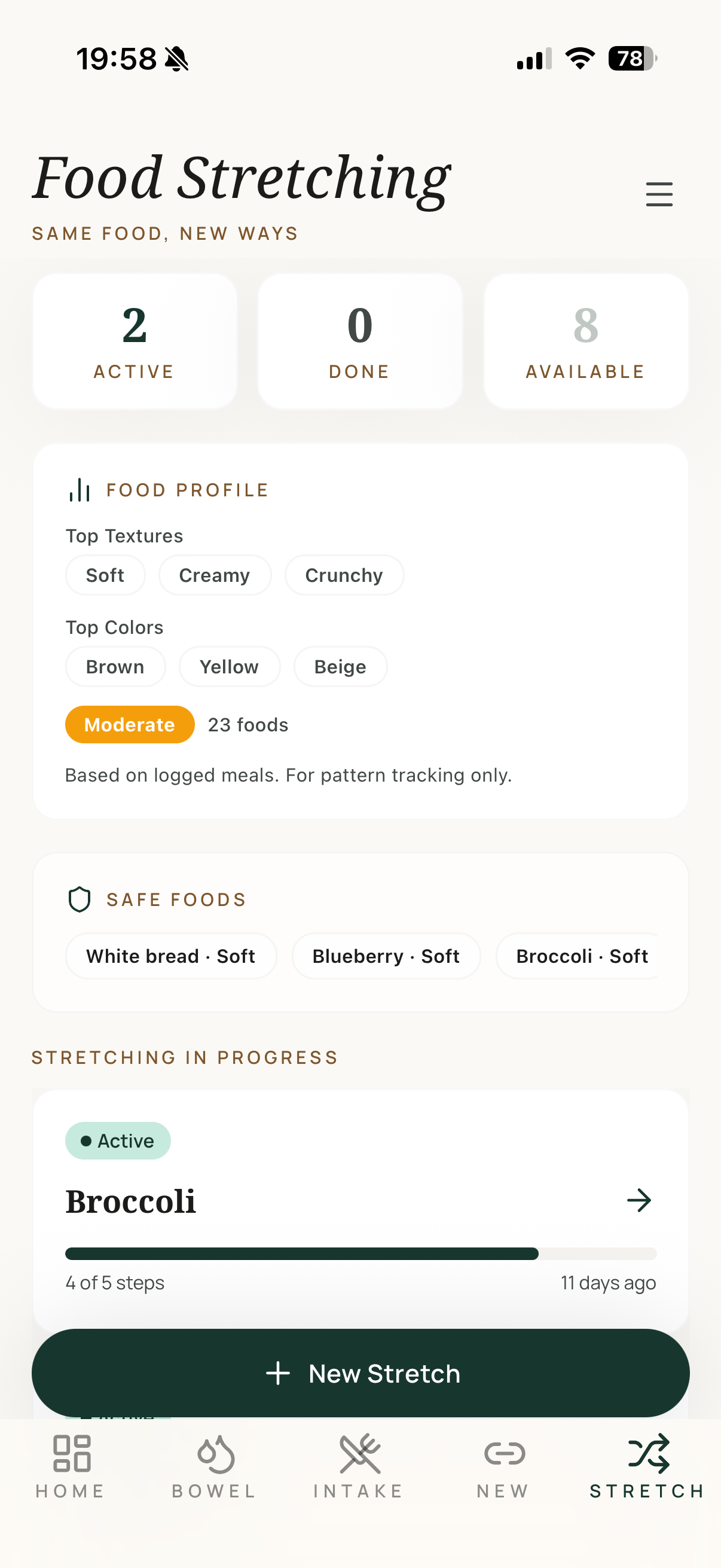
Five small dimensions. One at a time.
The framework comes from occupational therapy practice and a principle called Just-Noticeable-Difference (JND). It's the smallest change a sensory system can detect without being overwhelmed. Galet walks through all five. You start with whichever fits your child today.
Brand
Shape, texture, flavour: all the same. Only the box changes. Same cracker, different logo. Often the easiest place to start. Often the first hint that flexibility is possible.
Shape
Keep the brand. Change the shape. Round cracker, square cracker. Same cheese, cubed instead of sliced. The eyes and hands adjust before the mouth has to.
Temperature
Same food, cooler or warmer. Toast the bread. Chill the cheese. Warm apple slices for a minute in the oven. Temperature changes flavour and mouthfeel without changing identity. That's a useful bridge for kids who read food by its sensory signature.
Texture
Crunchier, softer, smoother. Same flavour, new mouthfeel. This is often where the work slows down. That's normal. Galet flags it so you can sit with a texture for as long as your child needs.
Volume
More or less of it on the plate. Presence on the plate is itself a stretch. You never have to ask your child to eat the new thing. You give them the chance to see it, smell it, or ignore it. Ignoring still counts.
Planning and noticing. Without the spreadsheet.
Galet is a place to plan a stretch before the meal and jot what happened after. Nothing more complicated than that.
- Pick a safe food. Add the foods your child reliably eats. These are the anchors.
- Pick one variable to stretch. Brand, shape, temperature, texture, or volume. Galet suggests a starting point based on what you've logged.
- Try it at your child's pace. One meal, one day, one week. No pressure to repeat. No guilt if you skip.
- Jot a quick note. A sentence about what happened. Not a score. Not a grade. Just what you saw.
- Watch patterns build over time. Galet shows which stretches tend to land and which don't, so you can plan the next one with more confidence.
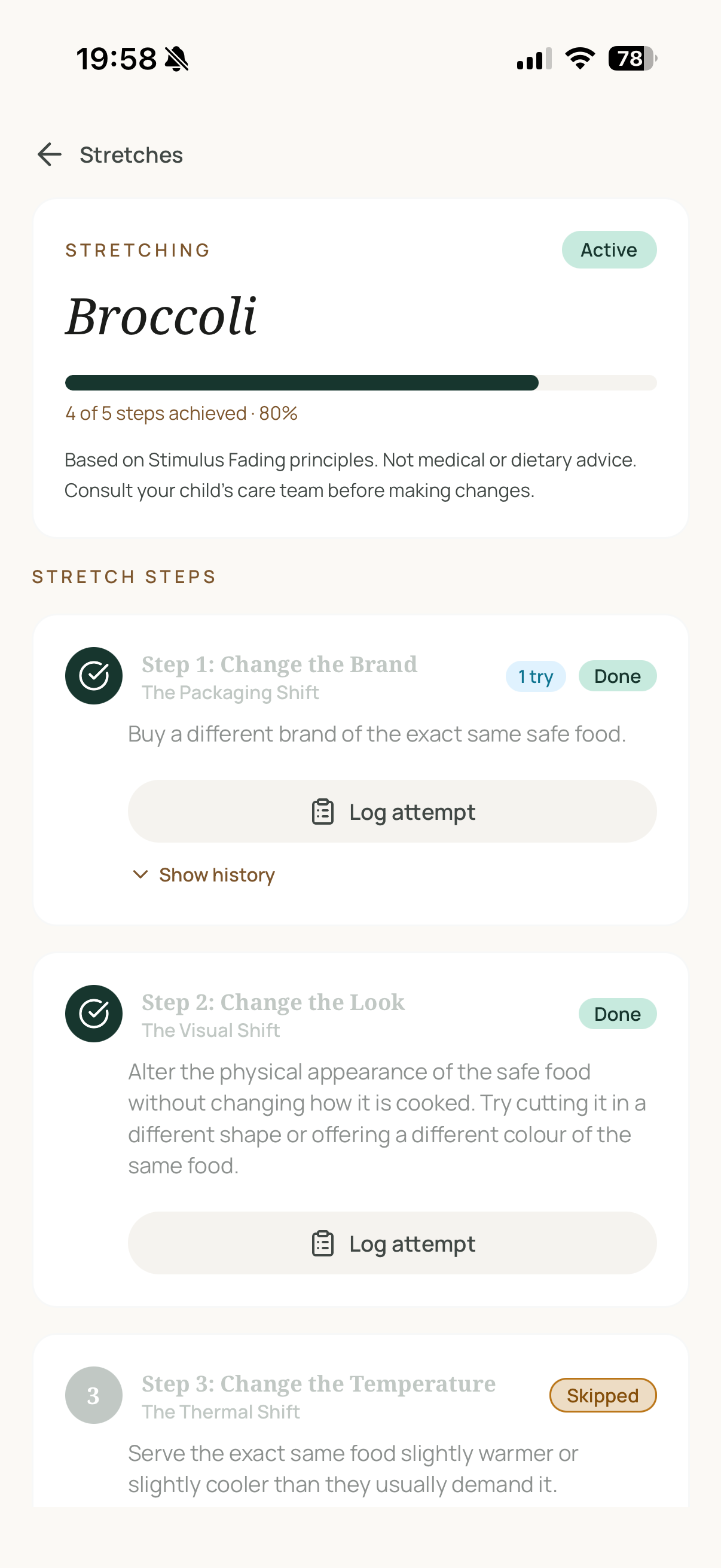
Food Stretching is deliberately non-AI.
Picking which variable to stretch benefits from your eye. Your knowledge of your child, your fridge, this morning. Not a model's guess. Galet's Food Stretching flow is a planner, not a generator. Food Chains is where AI helps. Here, you drive.
A few things we want to say clearly.
- Food Stretching is not a treatment for ARFID, autism, or any other condition.
- It's not exposure therapy in a clinical sense — that's a structured intervention delivered by a feeding team.
- It doesn't promise your child will eat the new food. Ever. That's not the goal.
- It's a support for parent-led trying, at your child's pace, alongside or between professional care.
Try Food Stretching with us.
We're opening a small Toronto pilot for 15 families. Free during the pilot. Core tools stay free forever.
Learn about the pilot